Case study
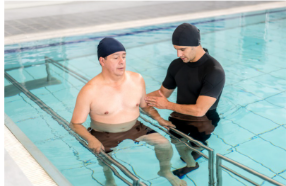
The case study that we chose talks about a patient who has CP, and received a 10 week long aquatic therapy session. Aquatic therapy was beneficial because it uses the buoyancy of water to take stress off your joints and help the patient complete low stress low impact movements. We chose this case study to guide our project because it highlights how playful, engaging activities can successfully improve balance in children with motor challenges. The therapeutic approach used in water inspired the concept of our balance therapy game, which aims to provide a motivating and supportive way for children to practice movement and develop better balance skills.
The overall problem we were trying to solve was creating a fun and engaging way for children and teenagers with Spastic Diplegic CP to receive therapy that helps improve their balance. Traditional therapy methods can sometimes feel repetitive, difficult to stay motivated in, or not designed in a way that keeps younger users actively involved. Many children with Spastic Diplegic CP struggle with poor balance and trunk control, toe stepping gait, and weak lower extremity strength, which all affect their mobility and confidence in everyday activities.
Because of this, we wanted to develop an experience that feels more like play than therapy while still supporting real physical progress. Our goal was to design something interactive, motivating, and easy to understand so that children and teens could practice key skills, especially balance, in a way that holds their attention and encourages consistent participation.
The Problem
Design Tools


For this project, we used several design tools to support our process. Canva was used to create our drafts and presentation slides so we could communicate our design clearly. Google Docs helped us collaborate on written work and keep our ideas organized. Google Sheets was used to test and map out different design ideas using the design matrix. Open Processing was used to write and test the code for our interactive game. These tools helped guide our development and supported each stage of the project.
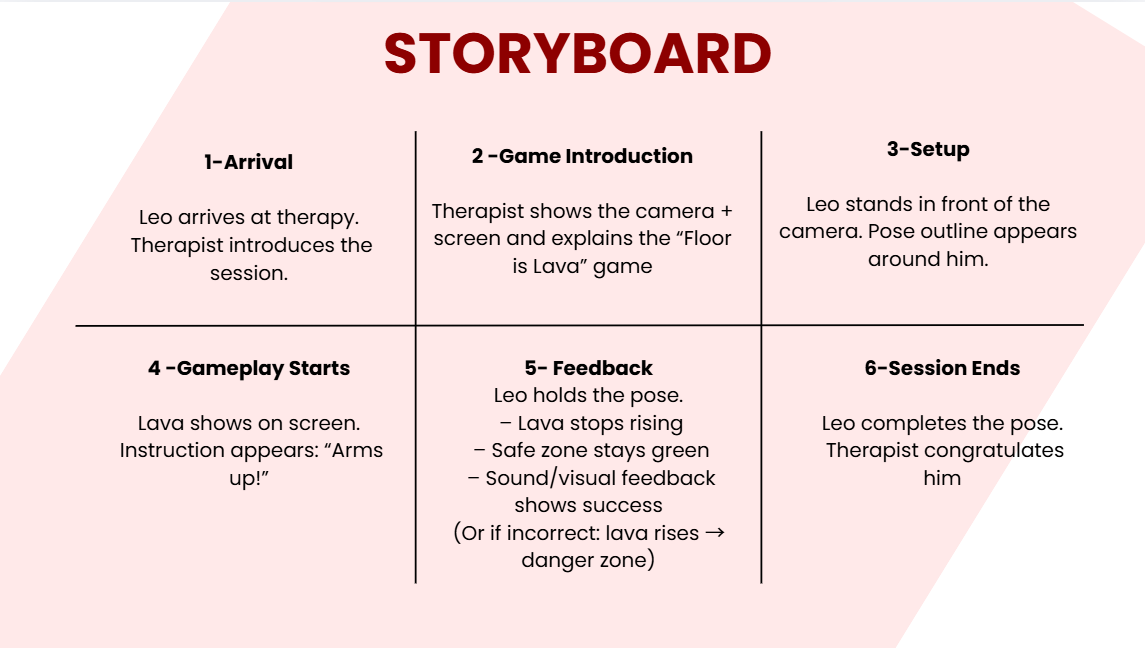
Storyboard:
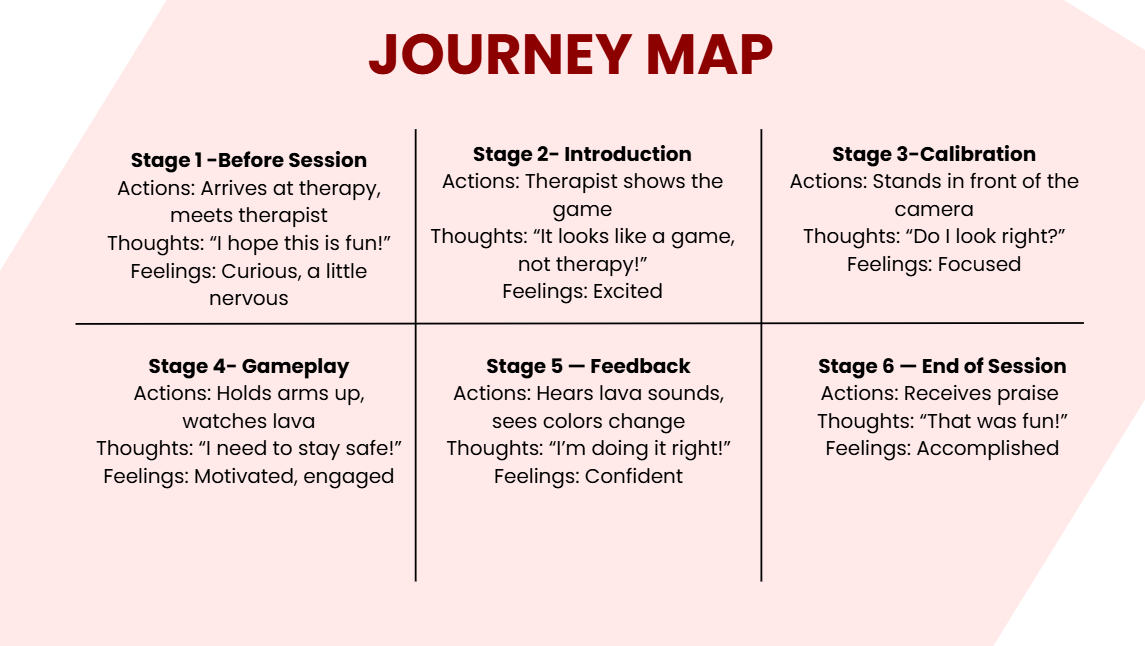
Journey Map:
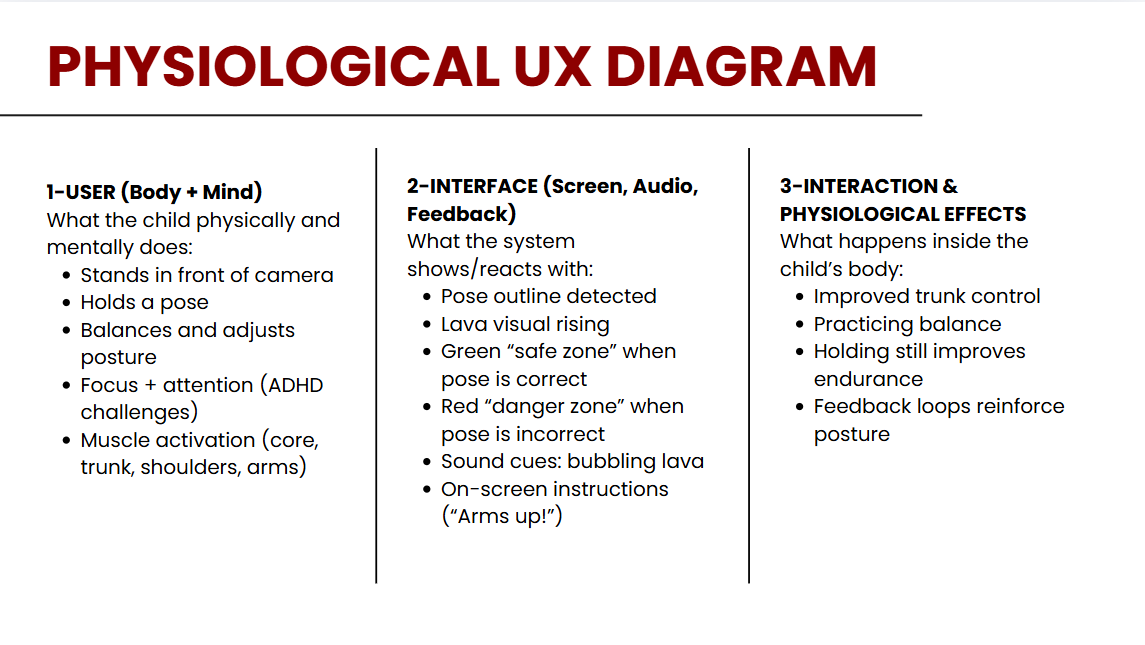
Physiological UX Diagram:
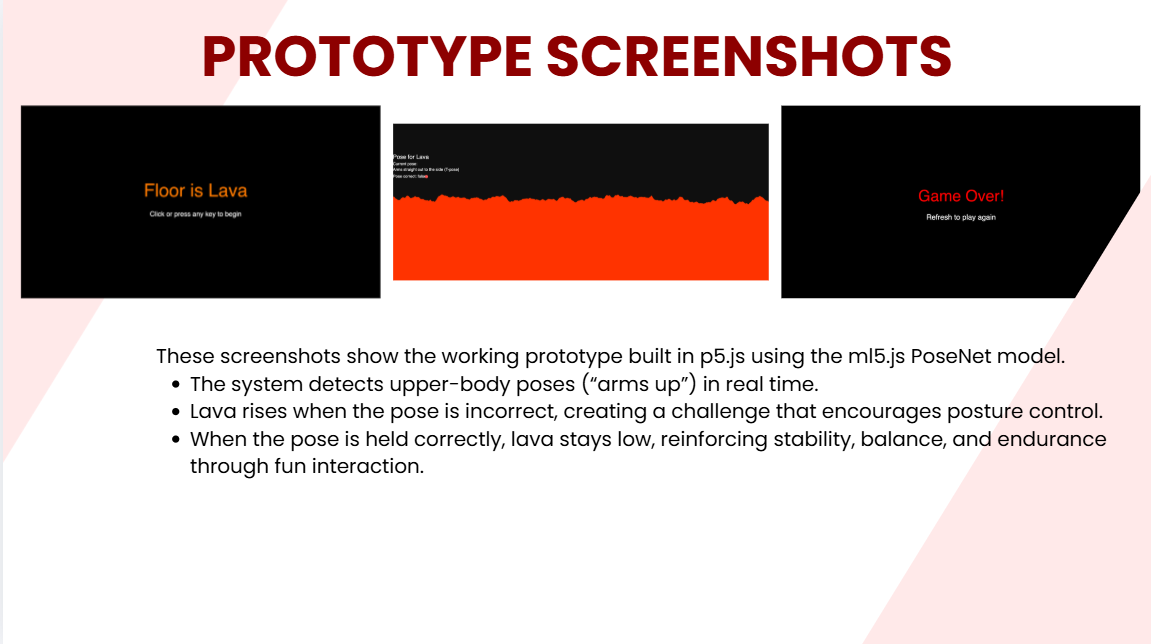
Prototype Screenshots:
The objective for this experience is to create a physical therapy experience based on a the case study that we chose. Aquatic therapy was beneficial to the patient in our case study because it uses the buoyancy of water to take stress off your joints and help the patient complete low stress low impact movements. This shows hydrotherapy can complement traditional physiotherapy for children with CP and while greatly benefiting individuals with other spastic-related conditions. Based on what we learned our goal is to create a low impact balance and movement game that is meant for kids ages 4-12.
Objective of the Experience
The solution is our Floor is Lava game, which will help our patient improve their balance and movement while playing an interactive, fun game Vs the patient doing traditional therapy, this way of therapy offers the patient a fun way to interact and play a game while getting all the benefits of physical therapy.
Solution:
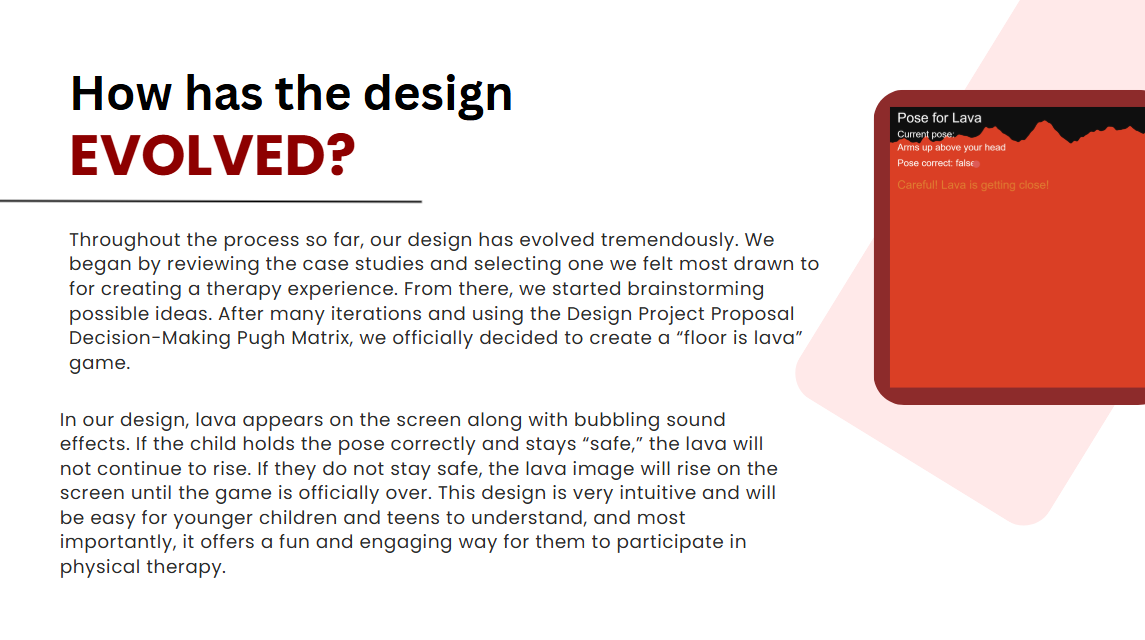
How has the design evolved?
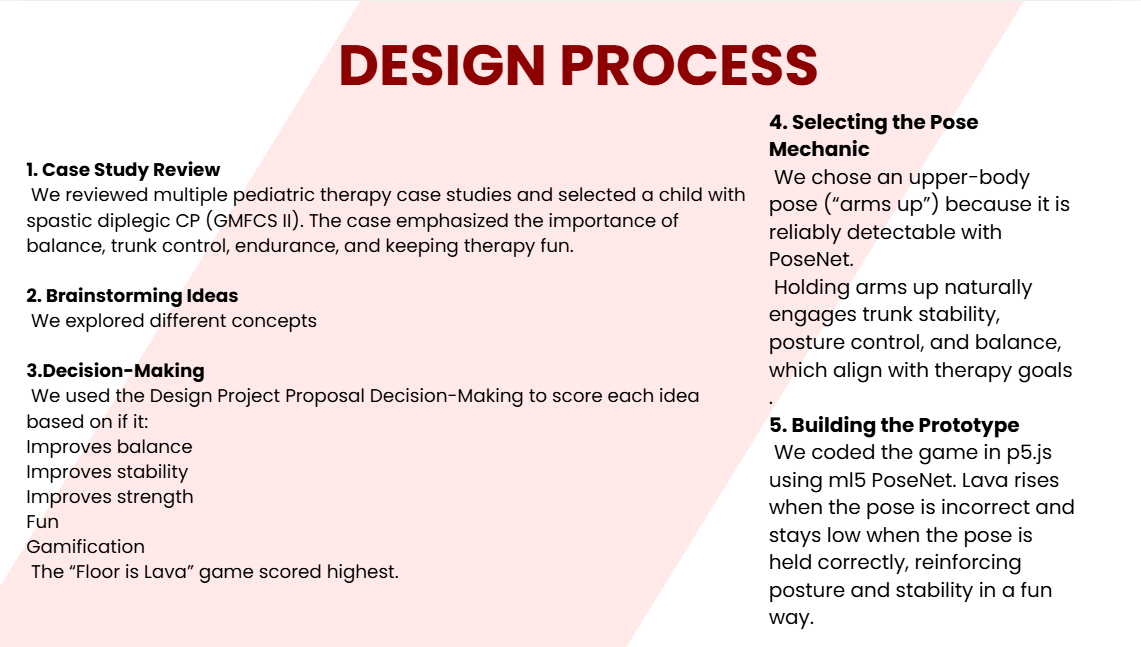
Design Process:
A key challenge of the game is staying safe from the lava by holding a pose and keeping distance from it. This creates an engaging way for the child to practice balance and trunk control. One ongoing challenge in our design is making sure the body tracking works effectively so the game responds correctly to the child’s movements. Another challenge is keeping the experience engaging enough for children and teenagers to stay motivated throughout therapy. Our main goal is to improve balance while still supporting other related therapy needs.
The Challenge:
-
Children interact with therapy longer because the “Floor is Lava” theme feels like a game instead of a medical task.
-
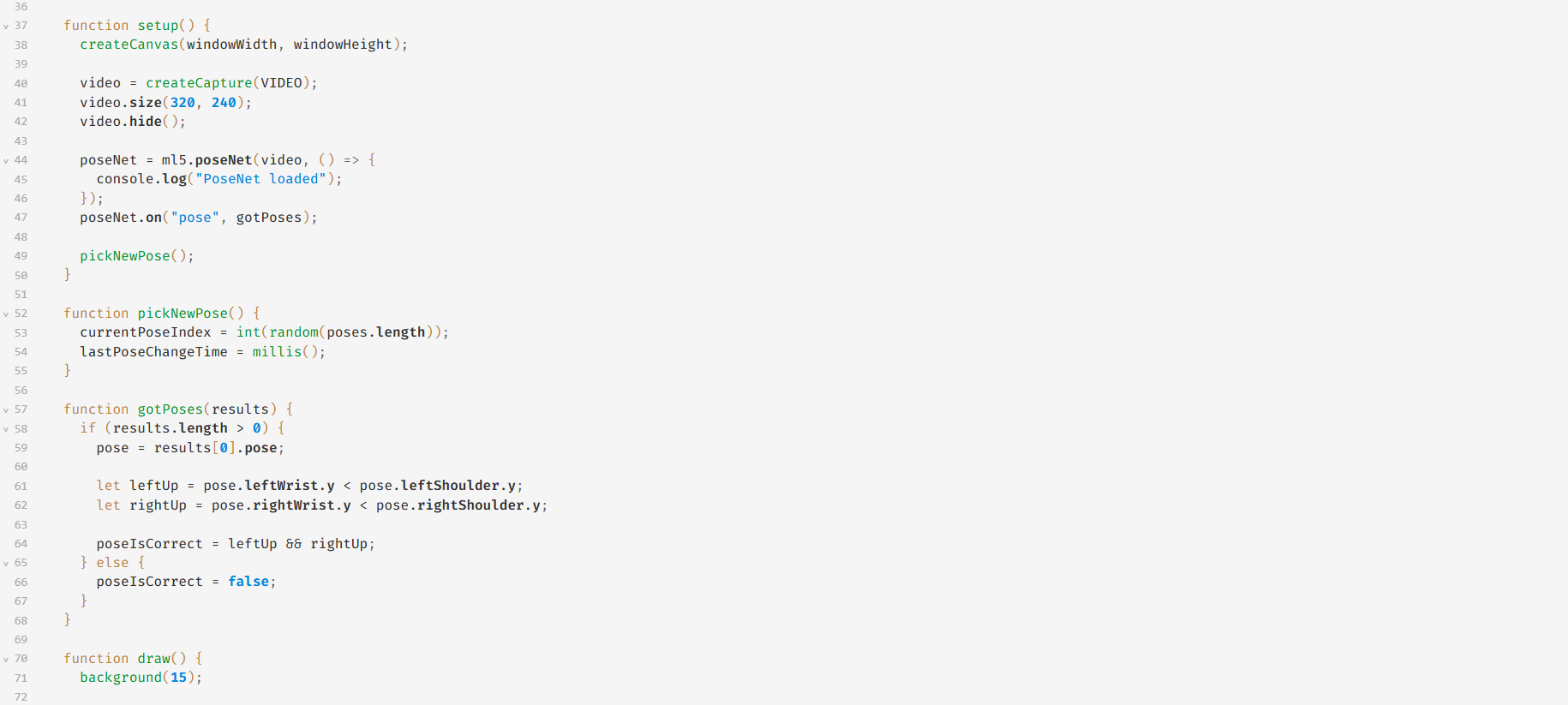
Holding the “arms-up” pose requires core activation, upright posture, and sustained balance, supporting the main therapy goals for children with CP.
-
The rising or stable lava gives instant feedback on posture quality.
Kids understand immediately when they need to adjust.
-
The bright visuals + sound cues help maintain attention, especially for children with ADHD or difficulty staying engaged in traditional therapy.
-
The game allows safe, low-impact balance training that reduces pressure on joints while still strengthening control and endurance.
-
The system can be expanded to include lower-body poses, multi-step activities, or gait training as technology and tracking accuracy improve.